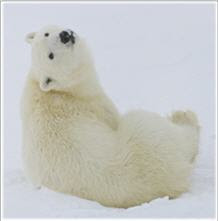
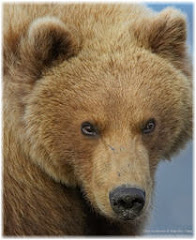
A Great Trip Needs An Extraordinary Destination ...Hallo Bay? ABSOLUTELY

Thursday, December 12, 2013

Goodall Quotes

"Michael Pollan likens consumer choices to pulling single threads out of a garment.  We pull a thread from the garment when we refuse to purchase eggs or meat from birds who were raised in confinement, whose beaks were clipped so they could never once taste their natural diet of worms and insects.  We pull out a thread when we refuse to bring home a hormone-fattened turkey for Thanksgiving dinner.  We pull a thread when we refuse to buy meat or dairy products from cows who were never allowed to chew grass, or breathe fresh air, or feel the warm sun on their backs."


Wednesday, December 11, 2013

Hug a Teddy Bear

Teddy Bears

The holiday season is here.  While everyone is out shopping for the Christmas season, pick up a small teddy bear, or find a gently used one from your home and donate it to your local Women's and children's shelters.  There are so many children that are not enjoying this time of season as all the other children are and your teddy bear donation can put a smile on their faces.

So find where you local safe haven shelters are for abused kids and make your teddy bear donation today.

Tuesday, December 10, 2013

Birding

Birds
  1. Owls cannot swivel their eyes. Instead they move their heads completely around to see straight behind them. They live on every continent except Antarctica. Soft fringes on their wings make their flight essentially silent.
  2. In the continental U.S. alone, between 1.4 billion and 3.7 billion birds are killed by cats annually.
  3. Famous birds include Ba in Egyptian mythology, Bar Juchne in the Talmud, The Cu Bird in Mexican folklore, the Firebird in Native American mythologies, Harpies in Greek mythology, the Phoenix in Egyptian mythology, Quetzalcoatl in Aztec mythology, and the Raven in Native American religions.
  4. Famous birds in literature include the Albatross in The Rime of the Ancient Mariner, Archimedes in The Once and Future King, Chicken Little, Chanticleer in Chaucer’s Nun’s Priest’s Tale, Fawkes and Hedwig in Harry Potter, Mother Goose, the Raven in Edgar Allen Poe’s “The Raven,” Owl in Winnie the Pooh, Thorondor (the king of eagles) in J.R.R. Tolkien’s Lord of the Rings, and The Ugly Duckling.
  5. Famous birds in cartoons, comics, and films include Big Bird in Sesame Street, Buzz Buzzard in Woody Woodpecker, Disney’s Darkwing Duck, Footloops cereal’s Toucan Sam, Woodstock in the Peanuts comic strip, Woody Woodpecker, and Iago in Aladdin.
  6. The bird with the most feathers is the whistling swan, with up to 25,000 feathers. Hummingbirds, on the other hand, are so small that they have fewer than 1,000.
  7. The only bird with nostrils at the end of its beak is the kiwi. This placement helps it sniff for food, such as worms and insects on the ground. It often snorts to clear its nostrils.
  8. Unlike most birds that sing, a woodpecker will drum its beak against a tree. Other woodpeckers can identify which bird it is by the sound of the drumming.
  9. The most talkative bird in the world is the African gray parrot. One parrot could say over 800 words. Most species of parrots can learn only 50.
  10. Many birds, such as starlings, sing notes too high for humans to hear.

Monday, December 9, 2013

Sea Urchin

Sea Urchin

Red sea urchins, Strongylocentrotus franciscanus, belong to the Phylum Echinodermata and class Echinoidea. This phylum also includes sea cucumbers and sand dollars, one of their common traits is their radial symmetry. They vary in color between a uniform red and dark burgundy and crawl slowly over the sea bottom using their spines as stilts.

The red sea urchin is the largest of the sea urchins, with a maximum "test", or outer skeleton, diameter of more than 18 cm and a maximum spine length of 8 cm. The test is made up of 10 fused plates that encircle the sea urchin like the slices of an orange. Every other section has holes through which the sea urchin can extend its tubed feet. These feet are controlled by a water vascular system. By changing the amount of water inside, the animal can extend or contract the feet. The tip of the tube foot is shaped so it can act like a suction disc. Spines can also be used for locomotion.

Reproduction occurs between March and September in Southeast Alaska. Urchins are broadcast spawners with external fertilization and aggregate during spawning. Female urchins may produce 100,000 to 2,000,000 eggs into the sea where they are fertilized. After fertilization, they develop into a morula and eventually become 8-armed echinopluteus larvae which are herbivorous, feeding on phytoplankton. After the larvae stage, they develop into juveniles and eventually settle onto the substrate. After settling, a rapid metamorphosis occurs including development of spines and tube feet and then internal organs form similar to an adult sea urchin. They seem to reproduce best when in dense aggregations.

Small urchins (less than 5 cm test diameter) often hide under the adults. Adult urchins can release a chemical cue that causes the young to aggregate underneath them when the adults detect the presence of certain kinds of starfish. Some research suggests that urchins can live over 100 years, and found some near Vancouver Island that may be 200 years old.

Field studies of annual growth rates in Southeast Alaska indicate an annual growth increment between 0 and 20 mm. Growth rate is generally greatest among urchins between 20 and 40 millimeters, with large variation among locations and years. Slower growth occurs in areas exposed to open ocean conditions. By age ten urchins have almost stopped growing in diameter and growth slows considerably.


Sunday, December 8, 2013

Fun Facts

Bear Facts
  1. The largest mammalian carnivore that ever lived on land was the giant short-faced bear. Twice the size of the biggest modern bear, it was 6' 5" tall at the shoulder when standing on all fours. Scientists believe it had very long legs and chased antelope on the North American prairies. It died around 12,000 years ago.
  2. The sloth bear has the shaggiest fur. The sun bear has the shortest fur so it can keep cool in the hot forests of Southeast Asia.

  3. The most accurate way to determine the age of a bear is to count the rings in a cross section of its tooth root under a microscope.
  4. Bears have two layers of fur. A short layer of fur keeps the bear warm. And a long layer keeps water away from the skin and short fur.
  5.   Bears are highly intelligent animals
  6. Bears are very smart and have been known to roll rocks into bear traps to set off the trap and eat the bait in safety.
  7. Bears live as long as 30 years in the wild. One captive brown bear lived to the age of 47.
  8. Bears are bowlegged. This gives them better grip and balance.
  9. Only the polar bear is a true carnivore. All other bears are omnivores, or animals that eat both plants and meat.
  10. Sun bears have the longest claws of any bear. They also have the longest tongues, which can reach 9.8" long.
  11. Bears can run up to 40 miles per hour, fast enough to catch a running horse. The fastest known human alive today is Usain Bolt, who can run 27mph.

Saturday, December 7, 2013

River Otter Facts

River Otter

The North American river otter is a thickset mammal with short legs, a neck no smaller than its head, inconspicuous ears, and a muscular body that is broadest at the hips. Its tail is powerful and a little more than a third as long as its head and body. Only the hind feet are webbed. Adults weigh 15 to 35 pounds (6.8–15 kg) and are 40 to 60 inches (102–152 cm) in length. On the average, females are about 25 percent smaller than males.
It is sometimes called the land otter (to distinguish from the sea otter).
When prime, river otter fur appears black-brown, with the belly slightly lighter in color than its back. The chin and throat are grayish. Otter fur consists of a very dense undercoat overlaid with longer guard hairs, which are usually removed by furriers.
River otters appear to have well-developed senses of smell and hearing. Their vision is not especially good but may be better underwater than above. Several sets of strong whiskers are used by the animal for hunting and avoiding obstructions.


Friday, December 6, 2013

3000 Likes

To Promote Bear Conservation in Katmai National Park
Our Goal is 3000 Likes
Get the word out.

Thursday, December 5, 2013

Goodall Quotes

"The greatest danger to our future is apathy.
Every individual matters and has a role to play in this life on Earth.
Only if we understand can we care.  Only if we care will we help.  Only if we help shall all be saved."

Wednesday, December 4, 2013

The Beauty of Wolves

Wolves
  1. Wolf gestation is around 65 days. Wolf pups are born both deaf and blind and weigh only one pound.
  2. Under certain conditions, wolves can hear as far as six miles away in the forest and ten miles on the open tundra.
  3. Wolves were once the most widely distributed land predator the world has ever seen. The only places they didn’t thrive were in the true desert and rainforests.
  4. Among true wolves, two species are recognized: Canis lupus (often known simply as “gray wolves”), which includes 38 subspecies, such as the gray, timber, arctic, tundra, lobos, and buffalo wolves. The other recognized species is the red wolf (Canis rufus), which are smaller and have longer legs and shorter fur than their relatives. Many scientists debate whether Canis rufus is a separate species.
  5. Immense power is concentrated in a wolf’s jaw. It has a crushing pressure of nearly 1,500 pound per square inch (compared with around 750 for a large dog). The jaws themselves are massive, bearing 42 teeth specialized for stabbing, shearing, and crunching bones. Their jaws also open farther than those of a dog.
  6. The North American gray wolf population in 1600 was 2 million. Today the population in North America is approximately 65,000. The world population is approximately 150,000.
  7. A hungry wolf can eat 20 pounds of meat in a single meal, which is akin to a human eating one hundred hamburgers.
  8. A wolf pack may contain just two or three animals, or it may be 10 times as large.
  9. Though many females in a pack are able to have pups, only a few will actually mate and bear pups. Often, only the alpha female and male will mate, which serves to produce the strongest cubs and helps limit the number of cubs the pack must care for. The other females will help raise and “babysit” the cubs.
  10. Lower-ranking males do not mate and often suffer from a condition of stress and inhibition that has been referred to as “psychological castration.” Lower-ranking females are sometimes so afraid of the alpha female that they do not even go into heat.

Tuesday, December 3, 2013

Colorful Facts About Birds

Bird Facts
  1. There are over 9,500 species of birds in the world. Scientists typically group them into 30 categories. Birds are the most widespread of all animals around the world.
  2. Characteristics that are unique to birds are 1) feathers, 2) bills, and 3) a furcula (fused collarbone, or “wishbone”).
  3. Approximately 2/3 of all the bird species are found in tropical rain forests.
  4. Hoatzin chicks have two claws on each wing. When they climb out of the nest, they use their claws to hold on to mangrove trees. They lose their claws once they mature, but they remain poor flyers.
  5. Many birds consume 1/5 of their body weight in food every day to get the energy they need to fly.
  6. The longest feathers ever seen were on a chicken in Japan. Its tail feathers measured 34.7 feet (10.59 m) long.
  7. To make them more lightweight, most birds do not have bladders to store urine. Rather than producing liquid urine to get rid of wastes, they produce a white, pasty substance. However, while an ostrich does not have a bladder like a mammalian bladder, it is unique among birds because it does have a complete separation of feces and urine.
  8. A bird’s lungs are much more complicated and efficient and take up more space than those of mammals, such as humans. A human’s lungs compose about 1/20 of its body, but a bird’s takes up 1/5.
  9. The Australian pelican has the longest bill of any bird in the world. It is nearly 2 feet (0.5 m) in length. The sword-billed hummingbird, with its 3.9-inch (10 cm) bill, is the only bird with a bill that’s longer than its body.
  10. The song of a European wren is made of more than 700 different notes a minute and can be heard 1,650 feet (500 m) away.

Monday, December 2, 2013

Lynx

The Lynx

The lynx is a large, short-tailed cat, similar to the bobcat, but distinguished by its long legs, furry feet, the long tufts on the tip of each ear, and a black-tipped tail. The large broad feet function as snowshoes to aid the lynx in winter hunting and traveling. The dense soft fur is buffy grey with indistinct spotting. Most adults weigh from 18 to 30 pounds (8.2–13.6 kg). Male lynx are generally larger than females and occasionally weigh 40 pounds (18.2 kg) or more.

Mating occurs in March and early April and kittens are born about 63 days later under a natural shelter such as a spruce felled by wind, a rock ledge, or a log jam. Lynx kittens resemble domestic cats at birth and are buff colored with longitudinal streaking on their backs. Their eyes open about 1 month of age, and they are weaned when 2–3 months old. Most litters include two to four kittens, but sometimes as many as six are born and survive.

The production and survival of lynx kittens is strongly influenced by cyclic changes in snowshoe hare and other small game populations. When prey are abundant, a high percentage of 1-year old or older female lynx produce kittens, most of which survive. When prey is scarce, very few yearlings breed, the number of breeding adults declines, and very few kittens survive until winter.

Kittens remain with their mother until late winter and acquire the hunting skills and knowledge necessary for their survival. During the following breeding season, family units begin to break up.