- Famous Lightfoot (Finn)
- Fine Young Chief (Navajo)
- Food of the Fire (Cree)
- Golden Friend (Finn)
- Golden King (nA)
- Gold Friend of Fen and Forest (Ural Altaic)
- Good-tempered Beast (Cree)
- Great Man (Siberian)
Saturday, June 14, 2014
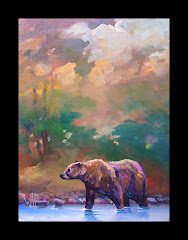
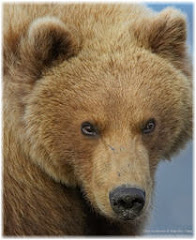
Bear Spirit Names
In many cultures, the bear was looked upon with such reverence
that members of the culture were not allowed to speak the word for
"bear ". Instead, they referred to the animal with varied and
creative euphemisms. These euphemisms are related here. The
general catagory refers to names that were wide-spread through
several native American groups. Many cultures found a spiritual
kinship with the bears, and speaking the name of the animal would
bring swift retribution from the gods.

Tuesday, June 10, 2014
Fun Bird Facts
- To attract a mate, a male Frigate bird will blow up its red throat pouch. The pouch can be as big as a person’s head.
- Over time, a surprising number of birds have lost their ability to fly. Being flightless has several advantages. For example, a flightless bird doesn’t need to develop and carry large flight muscles or burn up the energy that flying requires. A flightless bird can also get by with less food, which means it can survive in places where food is scarce.
- Depending on the species, a woodpecker’s tongue can be up to 4" long. It stores this long tongue by curling it in and sticking it through a specialized opening at the back of its neck, where it can then put it between the skull and skin.
- The seagulls in the Alfred Hitchcock movie The Birds (1963) were fed a mixture of wheat and whisky so they would stand around and not fly too much.
- In the movie The Birds (1963), the scene where actress Tippi Hedren is attacked took a week to shoot. The birds were attached to her clothes by long nylon threads so they could not fly away.
.jpg)
Monday, June 9, 2014
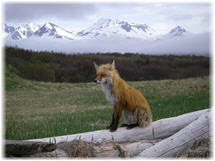
Fox
The red fox is omnivorous. Although it might eat
muskrats, squirrels, hares, birds, eggs, insects,
vegetation, and carrion, voles seem to be its preferred
food. Foxes cache excess food when the hunting is good.
They return to these storage sites and have been observed
digging up a cache, inspecting it, and reburying it in the
same spot. Apparently, they want to be sure that their
food is still there.
.jpg)
Sunday, June 8, 2014
River Otter
River otters in Alaska hunt on land and in fresh and
salt water eating snails, mussels, clams, sea urchins,
insects, crabs, shrimp, octopi, frogs, a variety of fish,
and occasionally birds, mammals, and vegetable matter.
Aquatic organisms no bigger than a man's finger are
usually eaten at the surface of the water, while larger
food is taken ashore.
If a fish or other animal is too big to be eaten at one meal, the remains are abandoned and become available to other flesh-eating mammals and birds. Scraps left out of the water may be a significant source of food available to some scavengers when snow and ice are present.
.jpg)
If a fish or other animal is too big to be eaten at one meal, the remains are abandoned and become available to other flesh-eating mammals and birds. Scraps left out of the water may be a significant source of food available to some scavengers when snow and ice are present.
Saturday, June 7, 2014
Bear Facts
- Baloo, from The Jungle Book, is a sloth bear.
- Most bears have 42 teeth, which is about 10 more than people have. A bear’s canines can reach 1.5" long, while a human’s are less than a half inch long.
- The giant panda has been described as a living fossil because it is such an ancient animal.
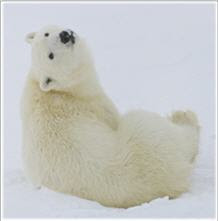
- Polar bears are the largest land predators on earth. They can stand more than 11' high and weigh more than 1,700 lbs.
- Black bears are typically smaller than grizzly bears, have a smaller shoulder hump, less shaggy fur, longer ears, and a less concave facial profile. Black bear claws are also smaller and more curved to better climb trees.
.jpg)
Friday, June 6, 2014
.jpg)
.jpg)
.jpg)
.jpg)
Thursday, June 5, 2014
Ptarmigan
The willow ptarmigan has an appropriate name. Not only
are willows important nesting habitat, they are also the
bird’s most important food source. The leaves of willow
shrubs often outrank any other item eaten in summer. In
winter the buds, twigs, and catkins of willows provide
four-fifths or more of their food. Because moose and
snowshoe hare also rely on willows for sustenance, it is
fortunate that these shrubs are so widespread in Alaska,
and are able to rapidly recover from severe browsing.
As with the other ptarmigan species, willow ptarmigan feed on berries in the fall and also eat overwintered berries in the spring.
.jpg)
As with the other ptarmigan species, willow ptarmigan feed on berries in the fall and also eat overwintered berries in the spring.
Monday, June 2, 2014
Bald Eagles
The bald eagle’s main diet is fish. Herring, flounder,
pollock, and salmon are taken along the coast, while the
Interior populations prey heavily upon salmon. Eagles also
prey upon waterfowl, small mammals, sea urchins, clams,
crabs, and carrion. Bald eagles are sometimes seen
swimming, laboriously “rowing” with their wings. Eagles
have thick down and float pretty well. It’s a common
misconception that eagles cannot let go of their prey: the
talons’ grasp is purely voluntary. An eagle will sometimes
grab a fish that’s too heavy to lift and will chose to
swim, towing the meal to shore, rather than lose it.

Sunday, June 1, 2014
Alaska Voles
Red-backed voles are omnivorous and will eat grass,
seeds, fruit, lichens, fungi, insects and meat. If a vole
is caught in a trap, others will feed upon the trapped
vole. Both the Microtus and red-backed voles form the base
of the food chain for many animals in Alaska. They are the
staple foods of weasels, marten, foxes, coyotes, all owls,
most hawks, inland breeding gulls, jaegers, and
occasionally great blue herons, domestic cats, northern
pike, and other voles.

Friday, May 30, 2014
Black Bear
As with brown bears, black bears spend the winter months
in a state of hibernation. Their body temperatures drop,
their metabolic rate is reduced, and they sleep for long
periods. Bears enter this dormancy period in the fall,
after most food items become hard to find. They emerge in
the spring when food is again available.
Occasionally, in the more southern ranges, bears will emerge from their dens during winter. In the northern part of their range, bears may be dormant for as long as seven to eight months. Females with cubs usually emerge later than lone bears. Dens may be found from sea level to alpine areas. They may be located in rock cavities, hollow trees, self-made excavations, even on the ground.

Occasionally, in the more southern ranges, bears will emerge from their dens during winter. In the northern part of their range, bears may be dormant for as long as seven to eight months. Females with cubs usually emerge later than lone bears. Dens may be found from sea level to alpine areas. They may be located in rock cavities, hollow trees, self-made excavations, even on the ground.
Thursday, May 29, 2014
Wolves
Wolves run on their toes, which helps them to stop and turn
quickly and to prevent their paw pads from wearing down.
Under certain conditions, wolves can hear as far as six miles away in the forest and ten miles on the open tundra.
A wolf pup’s eyes are blue at birth. Their eyes turn yellow by the time they are eight months old.
Wolves have about 200 million scent cells. Humans have only about 5 million. Wolves can smell other animals more than one mile (1.6 kilometers) away.
.jpg)
Under certain conditions, wolves can hear as far as six miles away in the forest and ten miles on the open tundra.
A wolf pup’s eyes are blue at birth. Their eyes turn yellow by the time they are eight months old.
Wolves have about 200 million scent cells. Humans have only about 5 million. Wolves can smell other animals more than one mile (1.6 kilometers) away.
Tuesday, May 27, 2014
Sandhill Cranes
Omnivorous ground feeders, cranes eat frogs, rodents,
insects, bulbs, seeds, and berries as well as occasional
seashore delicacies. They have adapted well to agriculture
and during the winter and on migration, feed largely on
waste grain and small animals associated with farm fields.
The dance of the sandhills may be one of the strangest breeding displays on the tundra. Often called a mating dance, display activity reaches a peak in late winter and early spring, but it has also been seen at other times of the year when two cranes meet. The ritual starts with a deep bow followed by great leaps, hops, skips, turns, and more bows. This dance can go on for many minutes.
.jpg)
The dance of the sandhills may be one of the strangest breeding displays on the tundra. Often called a mating dance, display activity reaches a peak in late winter and early spring, but it has also been seen at other times of the year when two cranes meet. The ritual starts with a deep bow followed by great leaps, hops, skips, turns, and more bows. This dance can go on for many minutes.
Subscribe to:
Posts (Atom)


 Alaska Time















 Posts
Posts